
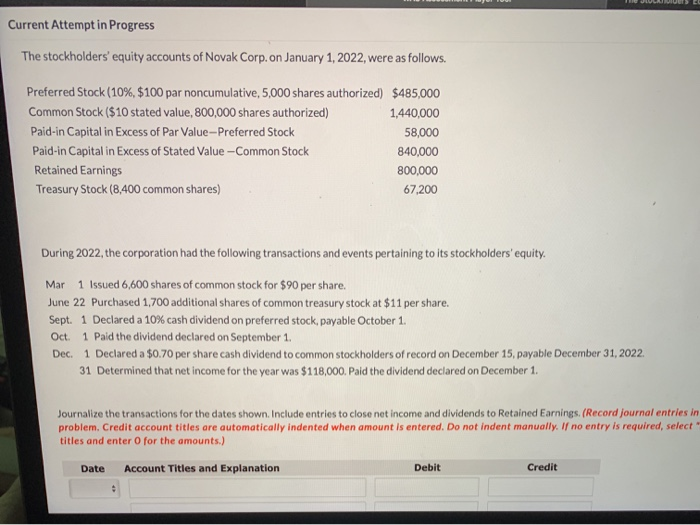
As a result, it decides to repurchase 1,000 shares of its stock at $50 for a total value of $50,000. Contra-equity accounts have a debit balance and reduce the total amount of equity owned – i.e. an increase in treasury stock causes the shareholders’ equity value to decline. Journalize the above transactions according the par value method of accounting for treasury stock. When the shares are reissued, Cash is debited for the proceeds and Treasury Stock is credited for the par value of the shares. Any additional credit is recorded in Capital in Excess of Par, just as if the stock is being issued for the first time. If there are no previous treasury stock transactions, if the balance in this paid-in capital account is not large enough to cover the loss, or if there is no other paid-in capital account from the same class of stock, Retained Earnings is debited.
Issuing No-Par Common Stock with a Stated Value
Companies may have different reasons to reacquire their shares and can be reacquired using different methods. There are two methods of accounting for treasury stock, the cash method and the par value method. Both methods have different ways of treating reacquisitions and resale of shares.
Treasury Stock Contra-Equity Journal Entry
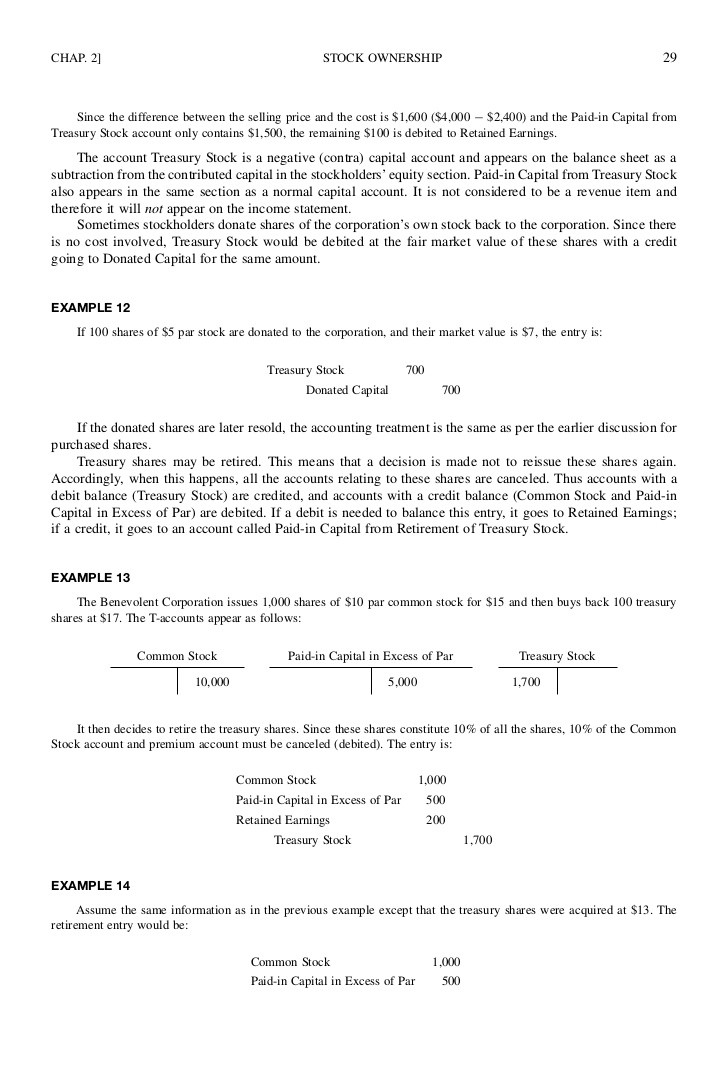
The cost method is the most commonly used method by most public entities. It uses the value paid by the company during the repurchase of the shares and ignores their par value. The cost of the treasury stock is included within the stockholders’ equity portion of the balance sheet under this method. It is common for stocks to have a minimal par value, such as $1, but sell and be repurchased for much more.
Ask a Financial Professional Any Question
- Hence, the fully diluted shares outstanding count is a relatively more accurate representation of the actual equity ownership and equity value per share of a company.
- These are shares that have been bought back by the company either because it has no further use for them or because they think the stock is undervalued and represents a good investment.
- Any excess paid for the shares above the par value is set off against the additional paid-in capital account first and any remaining amount is set off against the company’s retained earnings.
- The issued shares are treated as if they are being issued for the first time with the treasury stock account being credited instead of the share capital account.
- Thus, a firm can use both methods if it has acquired shares for different reasons.
Any remaining amount in excess of the balance in the additional paid-in account is set off against the retained earnings balance of the company. The cost method of treasury stock is the most commonly used method of accounting for treasury stock. In this method of accounting for treasury stock, a separate treasury stock account is established. Any shares that are bought back are recorded in the treasury stock account with the full amount paid for repurchase. The repurchase of shares is viewed as a temporary reduction in shareholders’ equity.
Does APIC only record the additional paid-in capital from shareholders?
Each share of the company’s common stock is sellingfor $25 on the open market on May 1, the date that Duratechpurchases the stock. Duratech will pay the market price of thestock at $25 per share times the 800 shares it purchased, for atotal cost of $20,000. The following journal entry is recorded forthe purchase of the treasury stock under the cost method.
Treasury Stock Accounting Cost Method and Constructive Retirement Method
The former represents repurchased shares held by the company, while outstanding shares are available for public trading. A treasury paid-in capital account is also either debited or credited depending on whether the stock was resold at a loss or a gain. The simplest way for companies is to reacquire any outstanding shares of the company directly from the market.
Ask a question about your financial situation providing as much detail as possible. At Finance Strategists, we partner with financial experts to ensure the accuracy of our financial content. The articles and research support materials available on this site are educational and are not intended to be investment or tax advice. All such information is provided solely for convenience purposes only and all users thereof should be guided accordingly.
Treasury stock refers to shares which have been bought by the issuing company itself. This loss does not affect the current period’s income but reduces the credit balance in the paid-in capital account that resulted allocating llc recourse debts from other treasury stock transactions. Under the cost method, treasury stock is recorded at the price paid for the repurchase. There’s no immediate impact on APIC or Retained Earnings at the time of repurchase.
