

She’s got more than twice as much owner’s equity than she does outside liabilities, meaning she’s able to easily pay off all her external debt. Long-term assets (or non-current assets), on the other hand, are things you don’t plan to convert to cash within a year. To make the Accounting Equation topic even easier to understand, we created a collection of premium materials called AccountingCoach PRO. Our PRO users get lifetime access to our accounting equation visual tutorial, cheat sheet, flashcards, quick test, and more. We’ll take you step-by-step through the Bench income statement and how it describes the current financial state of your company. Without understanding assets, liabilities, and equity, you won’t be able to master your business finances.

What is your current financial priority?
Essentially, the representation equates all uses of capital (assets) to all sources of capital, where debt capital leads to liabilities and equity capital leads to shareholders’ equity. A balance sheet is prepared by taking the company’s assets and liabilities and netting them against each other. In conclusion, financial ratios and performance allow stakeholders to examine various aspects of a company’s financial well-being, including liquidity, solvency, and profitability.
Understanding a Balance Sheet (With Examples and Video)
Liabilities are amounts a company owes to someone else, either immediately or over a long period. One way to own a more expensive asset is by taking out a loan to pay for it, which would increase a the accounting equation may be expressed as firm’s liabilities. So on a balance sheet, accumulated depreciation is subtracted from the value of the fixed asset.
What Is Shareholders’ Equity in the Accounting Equation?
Instead, these earnings are reinvested in the company to improve operations, pay off debts, petty cash or fund expansion projects. Retained earnings play a crucial role in growing a company and increasing its equity value over time. Because it summarizes a business’s finances, the balance sheet is also sometimes called the statement of financial position. Companies usually prepare one at the end of a reporting period, such as a month, quarter, or year. Unlike example #1, where we paid for an increase in the company’s assets with equity, here we’ve paid for it with debt.
Why You Can Trust Finance Strategists
Below liabilities on the balance sheet, you’ll find equity, the amount owed to the owners of the company. These are listed on the bottom, because the owners are paid back second, only after all liabilities have been paid. The accounting equation plays a significant role as the foundation of the double-entry bookkeeping system.

- The number of outstanding shares is taken into account when assessing the value of shareholder’s equity.
- For example, imagine a company reports $1,000,000 of cash on hand at the end of the month.
- The shareholders’ equity number is a company’s total assets minus its total liabilities.
- These accounts vary widely by industry, and the same terms can have different implications depending on the nature of the business.
- Another approach views owners’ equity as the sum of the original contributions by owners and the changes that have occurred since the date the firm came into existence.
- They are simply two different approaches to explaining the third component of the balance sheet.
The balance sheet is also referred to as the Statement of Financial Position. Contributed capital and dividends show the effect of transactions with the stockholders. The difference between the revenue and profit generated and expenses and losses incurred reflects the effect of net income (NI) on stockholders’ equity. Overall, then, the expanded accounting equation is useful in identifying at a basic level how stockholders’ equity in a firm changes from https://www.bookstime.com/ period to period. Noncurrent liabilities are items owed over several years, such as business loans, a car loan, or a lease.
- Everything listed is an item that the company has control over and can use to run the business.
- Get free guides, articles, tools and calculators to help you navigate the financial side of your business with ease.
- Below, we’ll break down each term in the simplest way possible, how they relate to each other, and why they’re relevant to your finances.
- This transaction also generates a profit of $1,000 for Sam Enterprises, which would increase the owner’s equity element of the equation.
- Higher profitability ratios indicate a company’s success in generating profits and effectively managing its financial transactions, which can lead to increased investor confidence and a higher net worth.
- You can access these reports through a company’s investor relations section on its website, or via the SEC EDGAR database.
What’s included in owner’s equity?
If the company takes $8,000 from investors, its assets will increase by that amount, as will its shareholder equity. All revenues the company generates in excess of its expenses will go into the shareholder equity account. These revenues will be balanced on the assets side, appearing as cash, investments, inventory, or other assets.
- Ted is an entrepreneur who wants to start a company selling speakers for car stereo systems.
- It can be used to measure performance, assess risks, and make decisions about how to allocate resources.
- Whether you’re looking to understand your company’s balance sheet or create one yourself, the information you’ll glean from doing so can help you make better business decisions in the long run.
- The type of equity that most people are familiar with is “stock”—i.e.
- A balance sheet is one of the primary statements used to determine the net worth of a company and get a quick overview of its financial health.
- You can learn a lot about a business’s health by looking at its balance sheet and calculating some ratios.
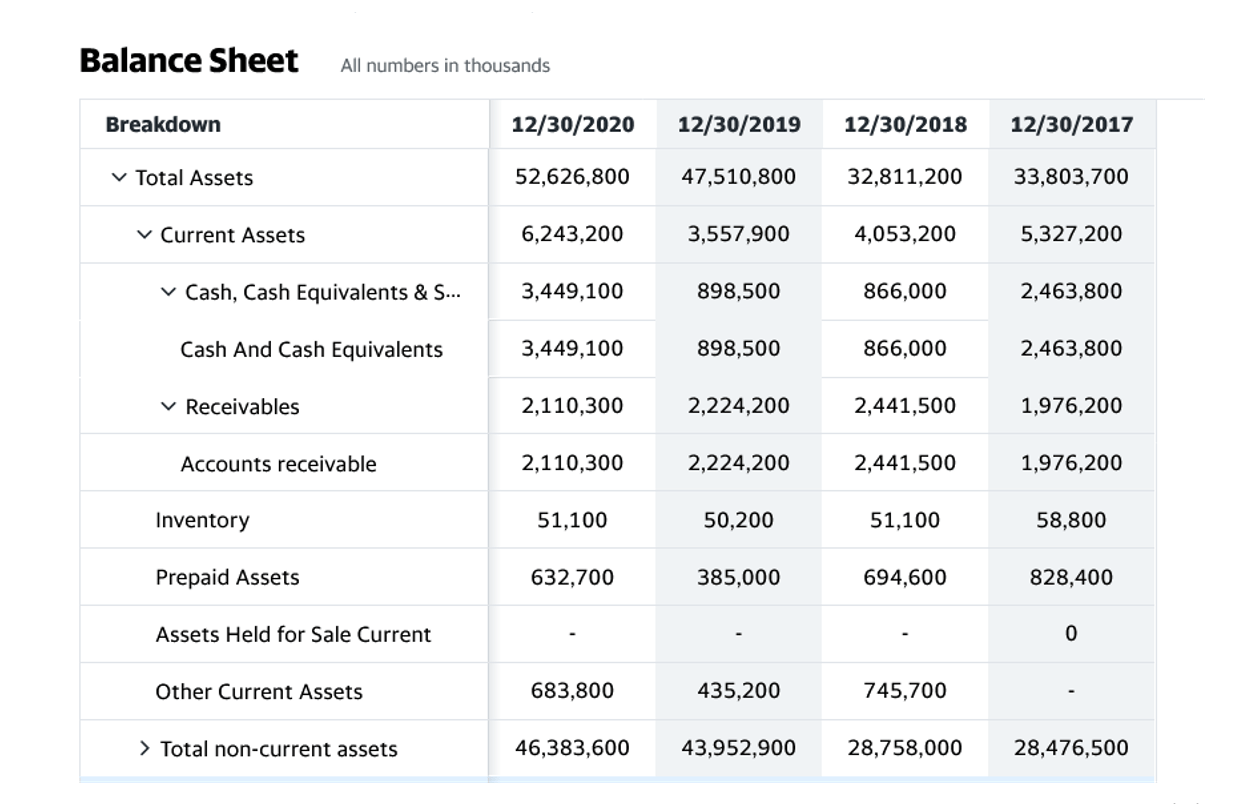
While income statements and cash flow statements show your business’s activity over a period of time, a balance sheet gives a snapshot of your financials at a particular moment. Your balance sheet shows what your business owns (assets), what it owes (liabilities), and what money is left over for the owners (owner’s equity). The balance sheet includes information about a company’s assets and liabilities. Depending on the company, this might include short-term assets, such as cash and accounts receivable, or long-term assets such as property, plant, and equipment (PP&E). Likewise, its liabilities may include short-term obligations such as accounts payable and wages payable, or long-term liabilities such as bank loans and other debt obligations. This balance sheet also reports Apple’s liabilities and equity, each with its own section in the lower half of the report.
